Regulatory and Standards Considerations for Edible Films and Packaging
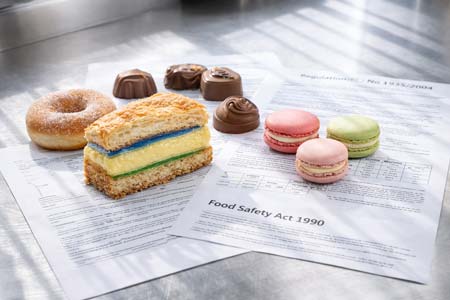 The development and commercial use of edible films and packaging must comply with a range of food-contact, food-safety and materials performance regulations. Vapour permeability data plays an important role in demonstrating that these materials are suitable for their intended use, particularly where moisture control directly affects food safety, quality and shelf life.
Food Contact and Safety Regulations
- Food-grade material compliance:
All edible packaging materials must be produced from substances approved for food contact and consumption, with documented safety and toxicological profiles.
- Migration and interaction control:
Vapour permeability characteristics influence moisture-driven migration of components between the packaging and the food, which must remain within regulated limits.
- Hygiene and contamination prevention:
Controlled moisture transfer helps reduce conditions that encourage microbial growth, supporting compliance with food hygiene regulations.
Shelf-Life and Stability Requirements
- Shelf-life substantiation:
Regulatory bodies increasingly require evidence that packaging performance supports declared shelf life. Vapour permeability measurements provide quantitative data to justify moisture stability claims.
- Water activity control:
Moisture regulation is closely linked to water activity, a key parameter in food safety and spoilage prevention referenced in food safety guidelines.
Sustainability and Environmental Regulations
- Biodegradability and compostability claims:
Edible and biodegradable packaging must meet regulatory definitions for environmental performance. Vapour permeability testing helps ensure materials perform as intended without compromising product quality.
- Reduction of plastic waste:
Many jurisdictions actively encourage alternatives to single-use plastics, accelerating regulatory acceptance of edible and bio-based packaging solutions.
 Integrated Perspective
By addressing regulatory expectations alongside functional performance, vapour permeability testing becomes not just a material characterisation tool but a critical enabler of compliance, market access and consumer confidence. Precise measurement supports transparent documentation, defensible shelf-life claims and the safe introduction of innovative edible packaging technologies.
Key Regulatory Frameworks for Edible Films and Packaging
United Kingdom (UK)
- Food Safety Act 1990
Requires all edible packaging to be safe for consumption and not injurious to health, making moisture control critical to prevent spoilage and microbial growth.
- UK Food Contact Materials Regulations (as retained EU law)
Packaging materials must not transfer substances to food at unsafe levels; vapour permeability influences moisture-driven migration behaviour.
- HACCP (Hazard Analysis and Critical Control Points)
Vapour permeability data supports moisture and water-activity control, which are key parameters in identifying and mitigating food safety risks.
European Union (EU)
- Regulation (EC) No 1935/2004
Governs all food-contact materials, requiring that edible films do not alter food composition or quality—moisture transfer performance is central to compliance.
- Regulation (EU) No 10/2011 (Plastics Regulation – relevant by analogy)
Provides a framework often referenced for barrier performance and migration behaviour when assessing alternative edible materials.
- European Food Safety Authority (EFSA) guidance
Requires scientific evidence, including stability and shelf-life data, to support the safety of novel edible packaging materials.
- Novel Foods Regulation (EU) 2015/2283
Applies when edible films contain new or unconventional ingredients, with moisture stability forming part of safety assessments.
 United States (USA)
- Food and Drug Administration (FDA) – Food Contact Substance Regulations (21 CFR)
Edible packaging components must be demonstrated safe under intended conditions of use, including moisture exposure.
- Generally Recognized as Safe (GRAS) notifications
Ingredients used in edible films must have GRAS status or equivalent approval, supported by stability and performance data.
- FDA Current Good Manufacturing Practice (cGMP)
Requires control of moisture and environmental conditions during production and storage, where vapour permeability data supports process validation.
Regulatory Context Summary
Across the UK, EU and USA, regulators consistently focus on food safety, migration control, shelf-life substantiation and material stability. Vapour permeability is a key parameter linking packaging performance to these regulatory expectations, as moisture transfer directly affects microbial risk, product quality and compliance with declared use conditions.
Accurate vapour permeability measurement therefore underpins not only material development but also regulatory approval, technical documentation and market acceptance.
|
|

 We welcome questions and comments about our products and services, you can reach us as follows: